


 Call Us Now
 Email Us Now
Safety and legal status often feel linked for immigrants living in Massachusetts. When a person relies on a spouse or family member for their green card, leaving an abusive environment becomes even more difficult. The fear that a report to the police or a separation will lead to deportation is a common tool used by abusers to maintain control.
The Violence Against Women Act (VAWA) exists to break this cycle. It provides a path for certain non-citizens to seek lawful status in the United States without the knowledge or consent of their abuser. This federal law applies to everyone, regardless of gender, despite the act’s name.
Understanding the VAWA Self-Petition Process
The core of VAWA protection is the self-petition. Normally, a U.S. citizen or lawful permanent resident (LPR) must file a petition on behalf of their immigrant family member. Under VAWA, the survivor files the petition on their own behalf, which removes the abuser’s power over the survivor’s immigration status.
To qualify, a petitioner must show they have a specific relationship with the abuser, which includes being the spouse or child of a U.S. citizen or LPR. It also covers parents of U.S. citizens who are at least 21 years old. The petitioner must establish they currently reside or have resided with the abuser (USCIS Policy Manual, Vol 3, Part D, Ch 2).
Federal law prohibits immigration authorities from disclosing any information about a VAWA applicant to the abuser or relying on information provided solely by the abuser to make an adverse determination (8 U.S.C. § 1367(a)(1)).
Proving Battery or Extreme Cruelty
The legal standard for a VAWA petition requires proving that the survivor suffered battery or extreme cruelty. Battery generally refers to physical acts of violence. Extreme cruelty is a broader term that encompasses emotional, psychological, and economic abuse.
In Boston, survivors might face threats involving local law enforcement or the withholding of necessities. USCIS considers a wide range of evidence to determine if extreme cruelty occurred, which can include:
- Threatening to have the survivor deported if they contact the Suffolk County District Attorney’s Office.
- Controlling all financial assets and preventing the survivor from working or accessing bank accounts.
- Forcibly isolating the survivor from friends, family, or community resources in Massachusetts.
- Constant verbal degradation or threats of harm against the survivor’s children.
The “any credible evidence” standard applies to these cases (8 CFR § 204.2(c)(2)(i)). While police reports from the Boston Police Department or medical records from Massachusetts General Hospital are strong forms of evidence, they are not the only way to prove a claim. Personal affidavits, letters from counselors, and witness testimony can also support a petition.
The Requirement of Good Moral Character
Applicants must demonstrate that they are individuals of good moral character. Generally, USCIS considers the three years preceding the petition. Certain criminal convictions can complicate this requirement, but there are exceptions for acts that were connected to the abuse.
For example, if an abuser forced a victim to participate in illegal activity, or if a conviction resulted from an act of self-defense, it might not automatically bar the applicant from relief. The legal framework allows for a waiver in specific circumstances where the “crime” was a direct result of the battery or extreme cruelty the survivor endured (USCIS Policy Manual, Vol 3, Part D, Ch 2).
Legal Protections for Children and Parents
VAWA protections extend beyond spouses. Children under the age of 21 whose U.S. citizen or LPR parent has abused them can self-petition. In some cases, a child can file until they turn 25 if they can prove the delay in filing was due to the abuse.
Additionally, a parent can file a self-petition if they have been abused by their U.S. citizen son or daughter who is at least 21 years old, which provides a vital safety net for older immigrants who may be experiencing elder abuse or domestic violence within their own homes in the Greater Boston area.
The Path to a Green Card
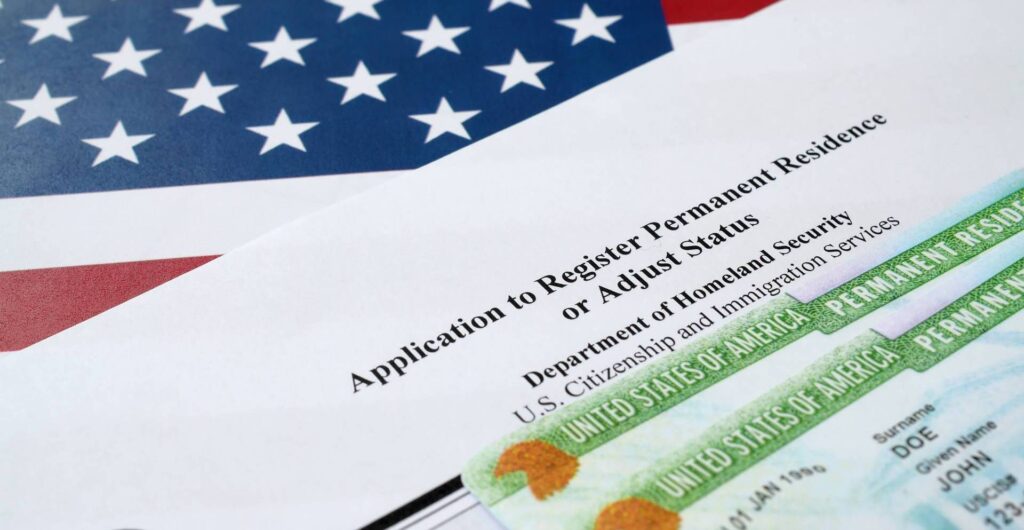
A successful VAWA self-petition (Form I-360) is often the first step toward becoming a lawful permanent resident. Once USCIS approves the petition, the survivor may be eligible to apply for a green card.
If the abuser is a U.S. citizen, the survivor is considered an immediate relative, which means they can often file their application for adjustment of status at the same time as their VAWA petition. If the abuser is a lawful permanent resident, the survivor must wait for a visa number to become available before they can finalize their green card application.
During this time, survivors can apply for work authorization. Having the ability to work legally in Massachusetts provides the financial independence necessary to maintain a life away from an abuser.
How Toland Law, LLC Supports Survivors
The legal requirements for VAWA are detailed, and the evidence needed can be complex to gather while focusing on personal safety. At Toland Law, LLC, we understand the sensitive nature of these cases. We provide a safe environment to discuss your options and help you build a comprehensive petition.
We offer free consultations to help you determine if you meet the requirements for a VAWA self-petition or other forms of immigration relief. Our team is committed to helping members of the Boston community secure their safety. If you are ready to explore your legal options, contact us at 781-819-3647 to speak with a member of our team.