



 Call Us Now
 Email Us Now
When a Police Officer Follows You Across the Town Line
Key Takeaways: Fresh and continued pursuit under M.G.L. c. 41, § 98A allows a Massachusetts municipal officer to chase a suspect into another city or town and arrest them there, but only under narrow conditions. The offense must have occurred in the officer’s presence and within the officer’s own jurisdiction, must be an arrestable offense the officer could have arrested for without a warrant at home, and the pursuit must begin without unreasonable delay and continue without an unreasonable break. Because these elements are conjunctive, a weakness in any one can support a suppression or dismissal motion. Fresh pursuit is a jurisdictional question, distinct from Fourth Amendment "hot pursuit" and from the separate uniform act governing out-of-state officers entering Massachusetts. Section 98A is not the only source of extraterritorial authority, so courts may look to other statutes or common law. These issues typically surface by comparing offense location, stop location, and dispatch timelines, and generally must be raised pretrial or may be forfeited. For non-citizens, the stakes are higher, since a conviction or even certain admissions can carry immigration consequences.
Massachusetts municipal police officers generally have arrest authority only within the city or town that employs them, with statutory exceptions allowing them to cross that line under limited conditions. One key exception is Mass. Gen. Laws ch. 41, § 98A, which permits an officer to continue chasing a suspect into a neighboring municipality during "fresh and continued pursuit", meaning the chase started promptly inside the officer’s own jurisdiction, for an arrestable offense the officer observed and had authority to act on there, and the officer kept after the suspect without unreasonable interruption. If any condition is missing, the arrest may be open to challenge, though a court may still look to other statutes or common law before concluding the arrest was unlawful.
If you were arrested after a chase that crossed municipal lines anywhere in Massachusetts, the details matter. The team at Toland Law reviews police reports, dispatch logs, and timelines to determine whether officers stayed within their lawful authority. Call 781-819-3647 or contact us now to schedule your free consultation. Better Call Paul!
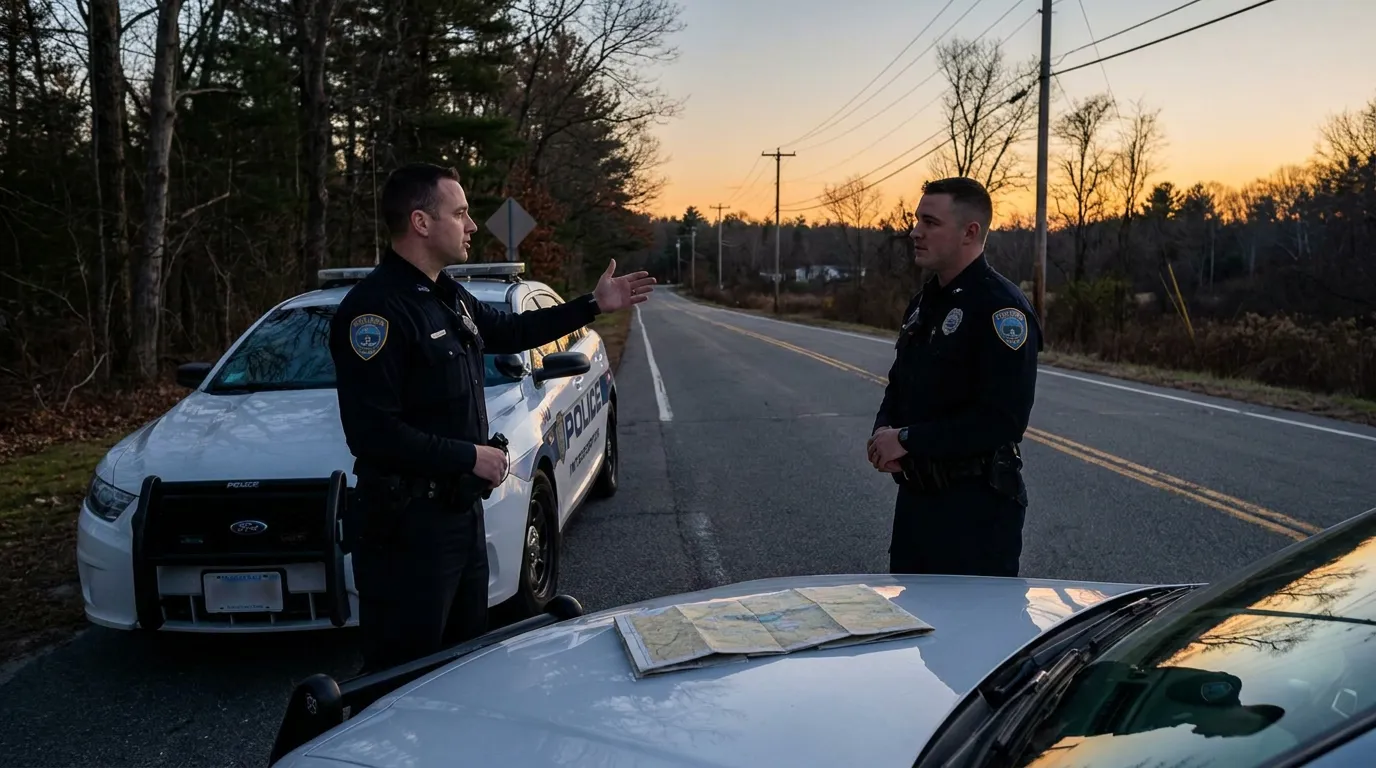
The Statutory Text Behind Chapter 41 Section 98A
The statute is short, but every clause carries weight. Under M.G.L. c. 41, § 98A, "[a] police officer of a city or town who is empowered to make arrests within a city or town may, on fresh and continued pursuit, exercise such authority in any other city or town for any offence committed in his presence within his jurisdiction for which he would have the right to arrest within his jurisdiction without a warrant."
The officer "may return any person so arrested to the jurisdiction wherein said offence was committed," and nothing in the section limits an officer’s other lawful arrest powers; the section is to be deemed declaratory of the common law of the Commonwealth so far as possible.
As enacted in 1967, the section broadened the common-law rule by permitting fresh pursuit arrests for misdemeanors as well as felonies, so long as the offense is arrestable, committed in the officer’s presence, and within that officer’s jurisdiction.
This savings language matters for both sides. A defense argument cannot stop at showing the officer left town; the question is whether some other source of authority also supported the arrest.
Breaking the Statute Into Its Elements
Most disputes over extraterritorial police authority come down to four elements, each fact-dependent, with answers usually emerging from timestamps, radio traffic, and testimony:
- The officer was empowered to make arrests in the employing city or town.
- The offense occurred in the officer’s presence and within that officer’s jurisdiction.
- The offense was one for which a warrantless arrest would have been lawful at home.
- The pursuit was both fresh (begun without unreasonable delay) and continued (maintained without an unreasonable break).
Because the elements are conjunctive, a weakness in any single one can become the center of a suppression or dismissal motion, often the fourth. One recurring limitation is the third: the Legislature did not include in § 98A authority for an extraterritorial stop following fresh pursuit of a civil traffic violation, since a civil infraction like a red-light violation is not arrestable. Courts have also noted that a fellow officer’s observations may be imputed to satisfy the fresh pursuit requirement when officers act jointly.
Fresh Pursuit vs Hot Pursuit: Clearing Up the Terminology
People often use "hot pursuit" and "fresh pursuit" interchangeably, but they are not the same in Massachusetts practice. "Hot pursuit" is tied to Fourth Amendment case law describing the exigent-circumstances doctrine that can justify warrantless entry when officers are immediately chasing a fleeing suspect. "Fresh pursuit" is a jurisdictional concept, answering whether the officer had lawful authority to act somewhere that officer ordinarily has none.
This distinction shapes how a challenge is framed. An exigency argument targets the reasonableness of a search or entry; a statutory pursuit argument targets the officer’s authority in the first place. Both can appear in the same case but are generally analyzed separately.
| Concept | Core Question | Typical Source |
|---|---|---|
| Hot pursuit | Did exigent circumstances justify warrantless entry or search? | Fourth Amendment and Article 14 case law |
| Fresh and continued pursuit | Did the officer have authority to arrest outside the home jurisdiction? | M.G.L. c. 41, § 98A |
| Interstate fresh pursuit | May an out-of-state officer act inside Massachusetts? | Uniform extraterritorial arrest on fresh pursuit statute |
Why the Word "Continued" Does So Much Work
The statute requires that the pursuit be continued, not merely that it once existed. A chase broken off and resumed later, after officers regroup or locate a suspect through separate investigation, may no longer qualify. Courts have distinguished merely following a vehicle from pursuing it. Yet the doctrine does not necessarily demand unbroken visual contact at every moment; pursuit undertaken without unreasonable delay can still satisfy the standard.
That tension is why these cases turn on facts: how much time elapsed, whether officers ever abandoned the chase, and whether the pursuit was one continuous effort. Reasonable judges can reach different conclusions on similar records.
When Out-of-State Officers Enter Massachusetts
Massachusetts has a separate statutory scheme, the Uniform extraterritorial arrest on fresh pursuit act, addressing pursuit across state lines rather than town lines. Under that framework, a member of a peace unit of another state with substantially equivalent laws, who enters Massachusetts in fresh pursuit to arrest a person for a felony committed in the other state, has the same authority to arrest and hold that person as a Massachusetts peace officer would for a felony committed here. The interstate act is limited to felonies, unlike § 98A, and imposes its own procedural requirements, including that a person arrested here by an out-of-state officer be taken before a court so the lawfulness of the arrest can be determined. These provisions, M.G.L. c. 276, §§ 10A to 10C, may be cited as the uniform extra-territorial arrest on fresh pursuit law and are construed to make the law uniform among enacting states.
The practical takeaway: the source of authority generally depends on where the chase began. Confusing the intrastate and interstate frameworks is a common error, and identifying the correct one early shapes the analysis.
How These Issues Actually Surface in a Criminal Case
A fresh pursuit issue rarely announces itself in the police report. It often surfaces when a defense attorney compares the offense location against the stop location, then checks the timeline against dispatch records. OUI stops near town borders, traffic offenses escalating into a chase, and drug or weapons arrests following a vehicle stop are situations where questions about Massachusetts police jurisdiction most often arise. Some agencies, including the State Police, have broader territorial authority, and mutual aid agreements may also supply authority in some circumstances.
The procedural vehicle matters too. A challenge to arrest lawfulness is generally raised pretrial through a motion to suppress or dismiss, not after a verdict. Massachusetts practice sharply limits post-verdict relief for issues that could have been raised earlier, which underscores why raising pursuit-authority issues early is important. Waiting may forfeit the argument or narrow the standard of review.
What Suppression May and May Not Accomplish
Even a well-supported argument that an officer exceeded statutory authority does not automatically produce dismissal. Massachusetts courts have not treated every statutory violation as requiring exclusion of evidence; remedies depend on the nature of the violation and the constitutional interests at stake. Sometimes the result is suppression of evidence obtained after the unlawful arrest; other times the court may find the arrest supportable on an independent basis. In a narrow set of cases, where the charge itself depends on the unlawful arrest, dismissal has followed.
Clients who believe officers overstepped may also have concerns overlapping with broader questions about police misconduct in Boston and departmental pursuit rules. Those concerns are related but legally distinct from a § 98A challenge, and a violation of internal pursuit policy does not by itself make an arrest unlawful.
💡 Pro Tip: Write down everything you remember about the stop while it is fresh, including the street you were on when the lights came on, the approximate time, and how many cruisers were involved. Small geographic details can become decisive in a pursuit-authority analysis.
Why Non-Citizens Should Pay Close Attention
For immigrants and their families, the consequences of a Massachusetts arrest can extend well beyond the criminal courtroom. A conviction, and in some cases even an admission to sufficient facts resulting in a continuance without a finding, may be treated as a conviction under federal immigration law, carrying consequences including removability, inadmissibility, or denial of naturalization. That reality can make pretrial challenges to arrest lawfulness especially significant, since an evidentiary ruling may change the entire posture of a case. Immigration consequences depend on the specific offense and the individual’s status, so they require case-specific analysis.
Our practice at Toland Law focuses on helping immigrants, and that dual perspective shapes how we approach criminal charges. Our attorneys bring diverse backgrounds, full energy, and extraordinary legal skills to every case, with the goal of helping clients remain in the U.S. and keep their families united here. Managing attorney Paul J. Toland, Esq. has practiced in Massachusetts since 2012 and leads a team recognized with Top Attorneys badges for 2022, 2023, and 2024.
💡 Pro Tip: Tell your defense attorney about your immigration status at the very first meeting. Strategy that looks favorable in criminal court can create serious immigration exposure, and the two analyses need to run together from day one.
Frequently Asked Questions
1. Does an officer have to see the offense happen for § 98A to apply?
Generally, yes. The statute is written around an offense committed in the officer’s presence within the officer’s own jurisdiction, for which a warrantless arrest would have been permissible there. Courts have allowed a fellow officer’s observations to be imputed where officers act jointly. Other statutory provisions and warrant-based authority may apply in different circumstances.
2. What happens if the officer loses sight of the vehicle?
Losing visual contact does not necessarily end the pursuit. The standard generally focuses on whether the effort continued without unreasonable delay rather than on uninterrupted observation, and courts evaluate this case by case.
3. Can the officer take me back to the town where the offense happened?
Where the arrest was lawful under the statute, § 98A expressly permits the officer to return the arrested person to the jurisdiction where the offense was committed.
4. Is an arrest automatically invalid if the officer left the jurisdiction?
Not necessarily. The statute preserves other lawful arrest powers and is, so far as possible, declaratory of the common law, so a court may uphold an arrest on an independent basis even when § 98A does not squarely apply.
5. How quickly should I raise a pursuit issue?
As early as possible. Challenges to arrest authority generally belong in pretrial motion practice, and delay may limit or eliminate available remedies.
Protecting Your Rights After a Cross-Jurisdiction Arrest
Fresh and continued pursuit is a narrow authority with strict conditions, and those conditions are not always satisfied in practice. Whether M.G.L. c. 41, § 98A’s requirements were met generally depends on the offense, the officer’s jurisdiction, the timeline, and the continuity of the chase. Outcomes always depend on the specific facts, and no attorney can promise a particular result. What a careful defense can do is seek to hold the government to the statutory standard.
If you are facing charges after a chase that crossed municipal or state lines, the attorneys at Toland Law offer frank and practical legal advice in a comfortable and friendly environment, and we will advocate aggressively on your behalf. Learn more about our approach to criminal defense Boston clients rely on, call 781-819-3647, or reach out today through our website to schedule your free consultation with Toland Law. Better Call Paul!
Disclaimer: This content is for informational purposes only and is not legal advice. Every case is unique, and results may vary. Consult an attorney about your specific circumstances.